Monday, August 17, 2015

Tuesday, August 11, 2015
Friday, July 31, 2015
Barren Mercury!
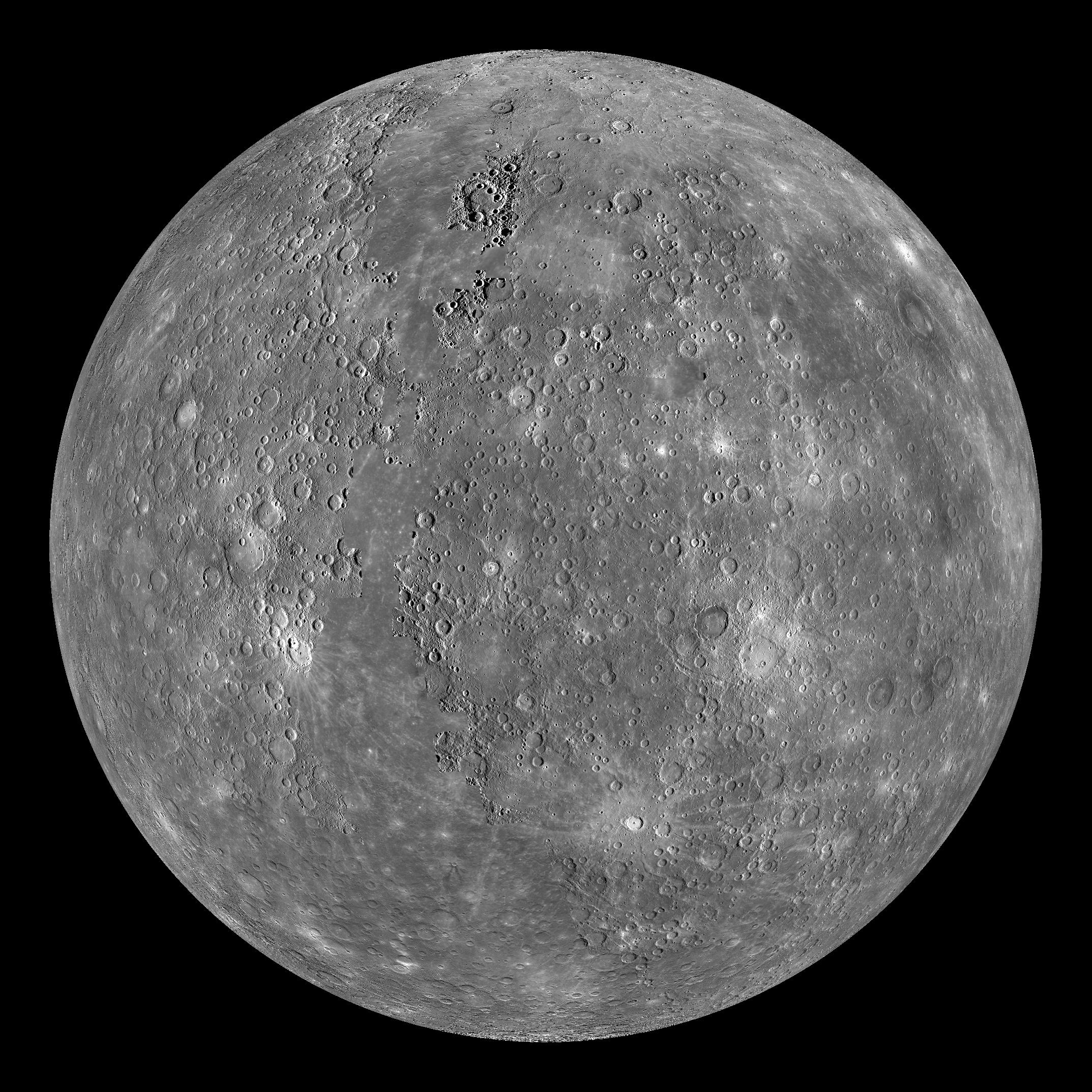
Mercury is the closest and the smallest planet in the Solar System. From Mercury the sun appears three times as large as it is viewed from earth. I believe that it is easy to understand how hot the surface of planet Mercury is because it is the closest planet to the sun. Temperature can rise up to 430 degrees Celsius and during night, temperature drops to -170 degrees Celsius as the planet does not have an atmosphere to retain the heat.
Mercury can be observed in the sky from Earth and it makes an indirect appearance 13 times a century. We can observe a special event known as a transit, where Mercury pass across the face of the sun. The first two transits of the 21st century occurred on May 7, 2003 and November 8, 2006. The next one will occur on May 9, 2016. (Isn't it next year???! I'm excited!)
Mercury is one of the fastest planets as it travels through space nearly 50 km per second which is the reason Mercury completes an year or a revolution in just 88 days. The surface of Mercury resembles to the Earth's moon, because of its barren surface.
The Caloris Basin which is a result of an asteroid impact is about 1300 km in diameter. Mercury shrank in radius about 1 - 2 km as the planet cooled down after its formation. It is the second densest planet of the solar system.
Mercury can be observed in the sky from Earth and it makes an indirect appearance 13 times a century. We can observe a special event known as a transit, where Mercury pass across the face of the sun. The first two transits of the 21st century occurred on May 7, 2003 and November 8, 2006. The next one will occur on May 9, 2016. (Isn't it next year???! I'm excited!)
Mercury is one of the fastest planets as it travels through space nearly 50 km per second which is the reason Mercury completes an year or a revolution in just 88 days. The surface of Mercury resembles to the Earth's moon, because of its barren surface.
The Caloris Basin which is a result of an asteroid impact is about 1300 km in diameter. Mercury shrank in radius about 1 - 2 km as the planet cooled down after its formation. It is the second densest planet of the solar system.
Thursday, July 30, 2015
Tuesday, June 2, 2015
The Solar System

The sun and its family of planets which is our immediate neighborhood is known as the solar system. The planets' moons or their natural satellites, comets, asteroids and meteoroids are all included in the solar system. Everything inside the solar system is held together with the help of the sun's gravity.
There are 8 planets in the solar system. Actually there were 9 but Pluto is not now included as a planet because of several reasons. (I will mention them later in another post).
The Inner Planets

Mercury, Venus, Earth and Mars are considered as inner planets because they lie on the inner side of the asteroid belt which orbit the sun. The planets formed about 4.6 billion years ago and all these inner planets were formed from dust particles and they ended up being rocky planets.
Outer Planets

Jupiter, Saturn, Uranus and Neptune are considered as outer planets as they are located outside the asteroid belt. They are also known as gas giants.
Models of the Solar System

Above is a picture of the heliocentric model which was explained by Sir Nicholas Copernicus. Later Johannes Kepler improved this model.
Early astronomers believed that the sun and all the other planets revolved around the Earth. This concept is known as the geocentric model of the solar system. The heliocentric model which placed the sun at the centre was first introduced by Aristarchus of Samos and was later explained and developed by Sir Nicholas Copernicus. Galileo Galilee's observations with his newly made telescope strongly supported the heliocentric model.
Saturday, April 18, 2015
Our Place in the Universe : The Milky Way
Our solar system is located within a galaxy known as the Milky Way. The Milky Way appears as a dim glowing band in the night sky in which the naked eye cannot distinguish individual stars. It appears like that because its disk shaped structure is viewed from within. In 1610, Galileo Galilei resolved the band of light into individual stars.
 The Milky Way is a barred spiral galaxy and there are about 100 - 400 billion stars in the Milky Way and astronomers believe there are about 100 billion planets in it too. A disk of gas and dust known as the interstellar medium fills the space between the stars. Our solar system is located about 27 000 light years away from the Galactic Centre of the Milky Way. At the very centre is Sagittarius A*, and intense radio source, which is believed to be a supermassive black hole.
It is believed that much of the mass of the Milky Way does not emit or absorb electromagnetic radiation. This mass is known as "dark matter".
The Milky Way is a aprt of the Local Group which is a part of the Laniakea or the Local Supercluster.
Background light or stray light from the moon can greatly reduce the visibility of the Milky Way. It is very difficult to view the Milky Way from a city or a town, but it can be easily observed from a rural area.
When we observe from the Earth, the visible region of the Milky Way occupies an area in the sky which consists of 30 constellations. The centre of the Milky Way is where the galaxy is the brightest, is located in the direction of the constellation Sagittarius.
The Milky Way which is the second largest galaxy in the Local Group is approximately 100,000 light years across and approximately 1000 light years thick. Most of the mass of the Milky Way appears to be dark matter, which only interacts in a gravitational way with other matter.


It is believed that much of the mass of the Milky Way does not emit or absorb electromagnetic radiation. This mass is known as "dark matter".
The Milky Way is a aprt of the Local Group which is a part of the Laniakea or the Local Supercluster.
Background light or stray light from the moon can greatly reduce the visibility of the Milky Way. It is very difficult to view the Milky Way from a city or a town, but it can be easily observed from a rural area.
When we observe from the Earth, the visible region of the Milky Way occupies an area in the sky which consists of 30 constellations. The centre of the Milky Way is where the galaxy is the brightest, is located in the direction of the constellation Sagittarius.
The Milky Way which is the second largest galaxy in the Local Group is approximately 100,000 light years across and approximately 1000 light years thick. Most of the mass of the Milky Way appears to be dark matter, which only interacts in a gravitational way with other matter.

Subscribe to:
Comments (Atom)